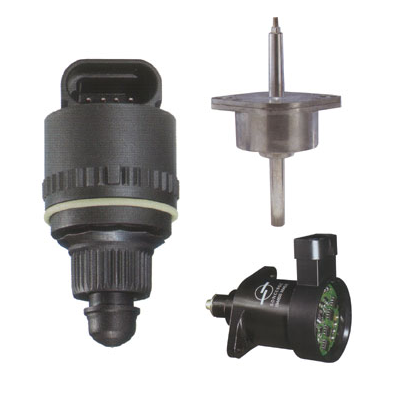
Small Linear Actuators
The SB range of linear actuators comprises actuator systems based on permanent magnet stepper motor technology and are used to perform linear movement ( linear motion ) in 'open-loop' control. They are an actuator linear.
Their large thrust and compact dimensions of these electric actuators allows them to be located in locations where space is limited. Although not a linear motor as such they come in various configurations in terms of the electrical and mechanical systems used and provide the user linear motion with a high degree of precisionand repeatability.
Based on a stepping motor design, (rotary actuators), these small linear actuators are compact and powerfull for their small size giving a cost effectivesolution to linear movement.
How linear actuators work
Linear actuator technology consists of a stepping motor in which the shaft is replaced by a screw. The centre part of the rotor is tapped to convert it to a 'nut' adjusted to that screw. By preventing the screw turning (anti-rotation), it can move axially, to give the linear motion required.
The increment, that is the linear progression corresponding to each step of the motor, is given by the screw pitch divided by the number of motor steps.
This is selected to suit the actuator characteristics required. The longer the pitch, the quicker the advance but the lower the power of the device. Conversely, a fine pitch limits the speed but increases the power available.
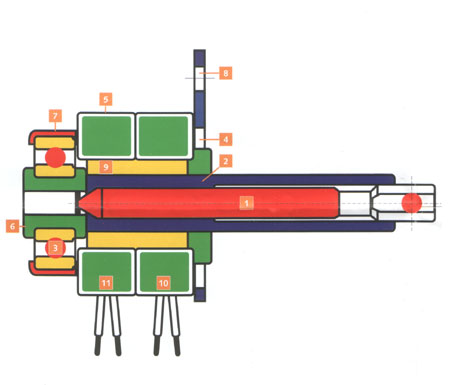 |
1 Screw
|